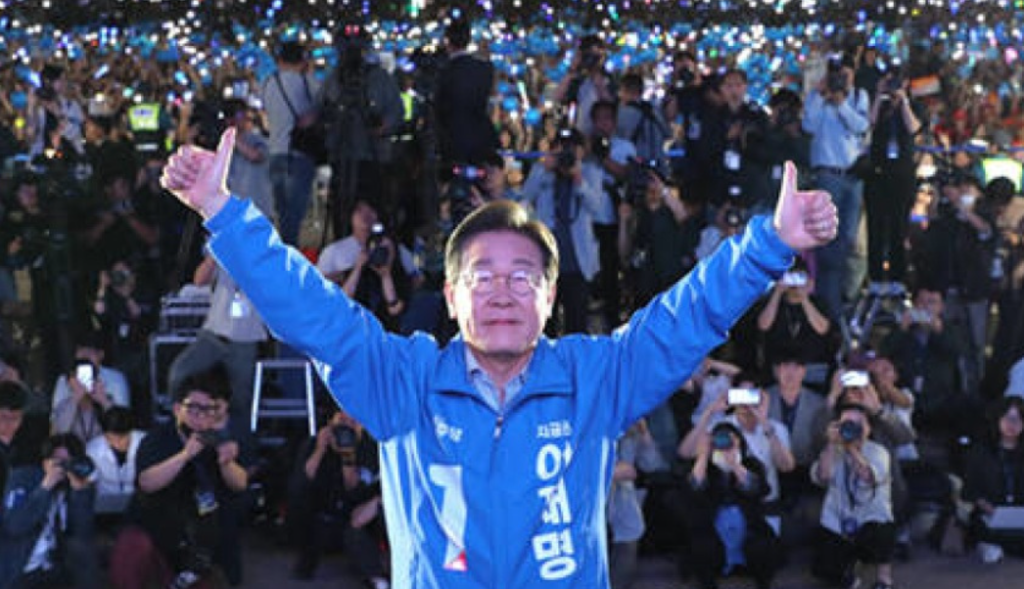
“What is more urgent than reform is people’s livelihood and economic recovery” — President Lee Jae-myung
1. Summary of the Lee Jaemyung Government’s Policy Stances
The Lee Jaemyung administration, which was launched in June 2025, aims to restore people’s livelihoods and secure future growth engines with “economic recovery” and “market stability” as its two pillars. In the long run, it can be summed up as a fair tax burden for fostering future industries such as AI, expanding housing supply, stabilizing the market, and revitalizing the economy
2. All-inone economic recovery by boosting domestic demand, supporting people’s livelihoods, expanding housing supply, and fostering future industries such as AI semiconductors
President Lee Jaemyung has set “economic recovery” as his No. 1 national goal. The new government is expected to implement a strategy to receive the priming water for economic recovery by focusing on recovering domestic demand and supporting the working class. In response, the government is expected to set up an emergency supplementary budget of W35 trillion to focus on recovering domestic demand and supporting the working class and small business owners, and implement “four sets of consumption enhancements” including payment of W250,000 per person and discounted supply of local currency, win-win consumption cashback, and eight qualification vouchers.
In the long run, the company aims to become one of the top three AI powerhouses, a potential growth rate of 3 percent, and a national power of 5 by investing heavily in future industries such as AI semiconductors. In addition, for those who are marginalized, it is expected to pursue inclusive economic policies such as supporting minority, platform workers, banning comprehensive wages (no free labor), extending the retirement age (65 years old), equal labor wages, 4.5-day workweek, and debt relief for small self-employed people.
3. 2.5 million housing units and real estate policy summary (maintaining taxes for multiple housing and speculative purposes)
President Lee Jaemyung expressed the principle of “not pressing house prices with taxes” during his campaign campaign in Gangnam, and contrary to his initial concerns, he is expected to pursue a real estate policy that focuses on expanding housing supply and market principles. It has declared the supply of 2.5 million housing units, including public rental housing, and is expected to boost housing supply in various ways, including the development of the fourth new city, the use of idle land, and the platform for close proximity to direct housing. In particular, given the lack of idle land in Seoul and the metropolitan area, the development of new cities linked to the opening of GTX (commuting within 15-20 minutes in the Seoul metropolitan area-Seoul), and the development of GTX major station areas is expected to be very active. As a result, it is expected to boost real estate and construction investment to revive the economy and boost domestic demand, ease the tax burden on ordinary and middle-class people, and maintain and strengthen taxes on speculative purposes and multi-households.
4. Summary of major foreign and foreign policies, including the restoration of U.S.-China relations and inter-Korean dialogue
In the Trump administration’s “America First” and defense costs and tariff pressures, the Lee Jae-myung administration is expected to use a speed control strategy, advocating “national interest, practical diplomacy.” China positively evaluated the Lee Jaemyung administration’s pragmatic diplomacy and did not hide its expectations that “Korea-China relations are together.” Chinese state media emphasized that “South Korea should not seek relations with China for relations with the United States,” and called for economic cooperation and free trade expansion. In the future, “balanced diplomacy” is expected to restore dialogue between the two Koreas based on diplomacy between South Korea and the U.S. and not give up national interest and economic cooperation.




 PUIA
PUIA 